
Direct Reel Handling vs. Pallet-Based SMT Storage: A Workflow Comparison
Automated SMT reel storage systems follow one of two handling concepts. In a direct-handling system, the machine grips and stores each reel on its own. In a pallet-based (also called tray- or carrier-based) system, the reel is first placed on a carrier, and the machine stores the carrier. Both concepts automate the warehouse. They differ in what happens before a reel goes in and after it comes out, and that is where operators spend their time. This guide walks through the workflow differences so you can judge which concept fits your production. With component shortages still driving delays and cost, how quickly the right reel reaches the line matters more than ever.
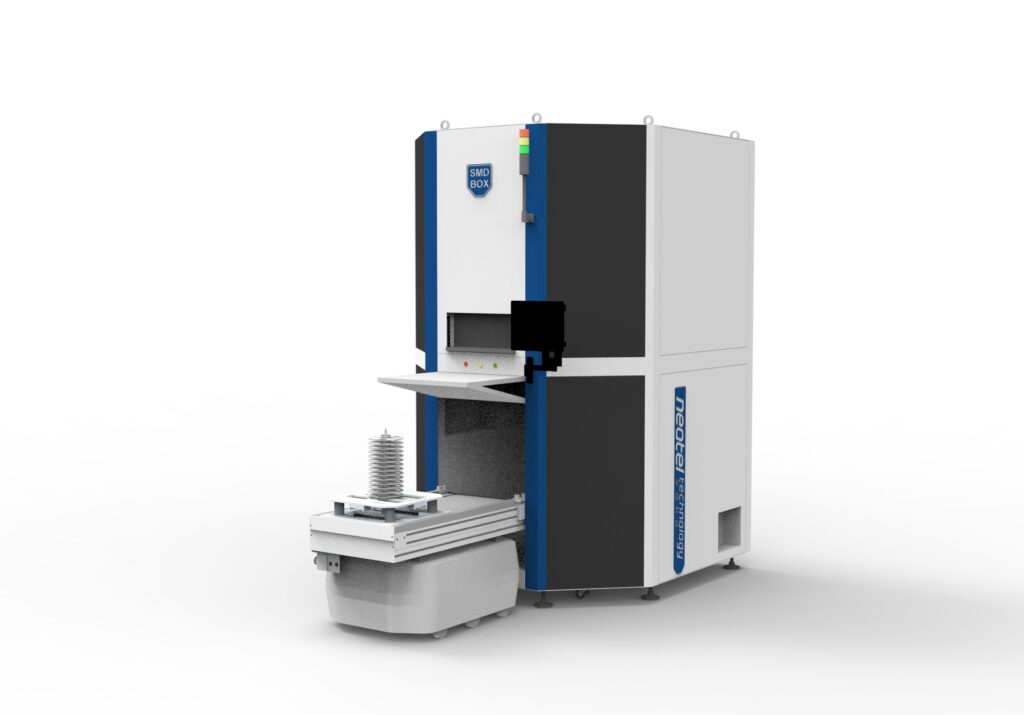
The two handling concepts at a glance
| Workflow step | Direct reel handling | Pallet-based handling |
|---|---|---|
| Loading | Operator presents the reel; the system scans and stores it | Operator places the reel on a carrier, then loads the carrier |
| Retrieval | The reel itself is delivered to the output | The carrier is delivered; the reel is lifted off it |
| Auxiliary material | None | A pool of carriers that must be stocked, stored and returned |
| Kitting to feeder sequence | Reels can be output one by one in work-order sequence | Depends on how many reels share a carrier and how they are picked from it |
| Mixed formats (trays, tubes, odd shapes) | Needs a system designed for mixed formats | Carriers can adapt many formats to one storage slot |
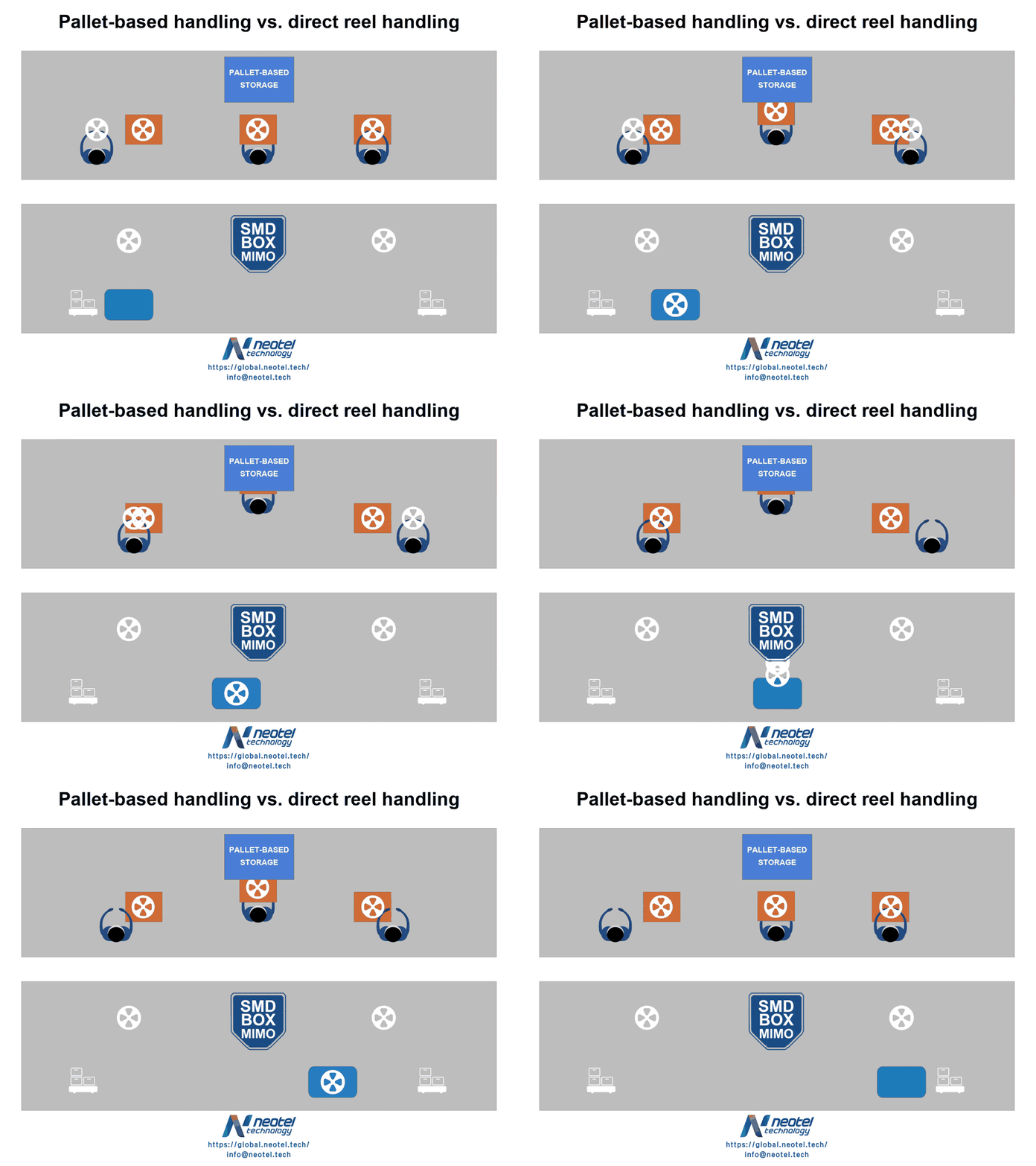
What pallet-based handling adds: pre-loading and post-unloading
With carriers in the loop, every storage cycle gains two manual steps.
Pre-loading
Before storage, each reel is seated on a carrier and checked so that it sits securely. The work is simple, but it is repeated for every reel that enters the warehouse, and it has to happen before the automated part of the process can start.
Post-unloading
After retrieval, the reel is taken off the carrier before it can go to the feeder or the kitting trolley. The empty carrier then needs a destination: back into the system, or onto a separate rack until it is needed again.
In a direct-handling system these two steps do not exist. The operator presents the reel, the system identifies and stores it, and at retrieval the reel arrives ready to use.
Carrier logistics: the material nobody planned for
Carriers are themselves a material that has to be managed. A plant needs enough of them for peak inventory, a place to keep the empty ones, and a routine that brings them back to the loading station. None of this is difficult, but it is work that sits outside the automated system and is easy to leave out of the business case. When you compare concepts, count the carriers, the floor space for them and the minutes per shift spent moving them.
Sequenced kitting
Sequenced kitting means reels leave the warehouse in the order the line needs them, ideally matched to the feeder slots of the work order. The closer the storage output is to “one reel, in sequence, ready to mount”, the less sorting happens at the line.
Direct handling maps naturally onto this: the system outputs individual reels in work-order sequence. With carriers, the result depends on the design. If one carrier holds one reel, the sequence is preserved but the unloading step remains. If a carrier holds several reels, an operator picks the right reel from it, which adds a manual decision at exactly the point where mistakes are most expensive. Ask any vendor to demonstrate a complete kitting run for one of your real work orders, and time it from request to reels-on-trolley.
A lean view: where the extra steps show up
Lean manufacturing names seven kinds of waste: overproduction, inventory, transportation, motion, waiting, overprocessing and defects. Handling steps that do not change the product fall mainly into two of them.
- Waiting. A reel that must be prepared before storage, or freed from a carrier after retrieval, reaches the line later than one that moves directly.
- Motion. Placing reels on carriers, lifting them off and moving empty carriers are operator movements that add no value to the assembly.
The size of the effect depends on volume. At a few dozen reel movements per shift it is negligible. At several hundred per shift across three or more lines, seconds per reel become operator-hours per week.
When pallet-based storage is the better choice
Carriers exist for a reason. They let one storage slot accept many package types: JEDEC trays, tubes, small boxes, odd-sized reels or stencils. If a large share of your inventory is not on standard reels, or if you want one system for very mixed material, a carrier concept can be the simpler answer. The trade-off is the handling described above. For reel-dominated SMT inventory with frequent retrieval, direct handling removes steps. For highly mixed inventory with slower turnover, carriers buy flexibility.
Evaluation checklist
- How many reel movements (in and out) do you have per shift, and at what peak rate?
- What share of your part numbers is on standard 7–15″ reels, and what share is trays, tubes or other formats?
- How many manual touches does one reel need from goods-in to feeder, in each concept?
- If carriers are used: how many are needed, where do empty ones live, and who returns them?
- Can the system output a kit in feeder sequence for a real work order, and how long does it take?
- How does the system connect to your ERP/MES, and does it support AGV or AMR delivery?
How Neotel approaches it
Neotel’s SMD BOX series uses direct reel handling. SMD BOX MIMO works in Multiple-In Multiple-Out mode: it stores and retrieves several reels at once, dispatches batch work orders and integrates with AGVs, which suits plants that kit for three or more lines at the same time. For inventory that is not only reels, SMD BOX HYBRID stores mixed formats in one system. All models run on the SMF material-flow software for work orders, MSD tracking and traceability. See the full SMD BOX series for a model comparison.
Want to check the concept against your own numbers? Send us your reel count and movements per shift and we will propose a configuration. Request a quote.
Frequently asked questions
What is pallet-based SMT reel storage?
It is an automated storage concept in which each reel, tray or tube sits on a carrier (pallet or tray), and the machine stores and retrieves the carrier rather than the component package itself.
What is direct reel handling?
The storage system grips, identifies and stores the reel itself. There is no carrier to load before storage or to remove after retrieval.
Which concept is faster for kitting?
It depends on the system and on your material mix, so measure it: time a complete kit for one of your own work orders, from request to reels ready at the line, including any loading or unloading of carriers.
Published · Updated