PCB Handling Covers Three Different Jobs
“PCB handling” gets used for three distinct things, and mixing them up is how boards get damaged and WIP gets lost:
- Human handling — how people touch, pack, and store boards. Governed by IPC-1601 (bare boards) and ESD/moisture rules.
- Machine transport — conveyors, loaders, unloaders, and buffers that move boards through the line.
- WIP storage — where populated boards in magazines wait between processes, sometimes for hours, sometimes for days.
This guide takes them in order — because most factories have solved the first two and barely manage the third.
Human Handling: the IPC-1601 Basics
- Touch the edges. Gloves or finger cots for exposed surfaces; skin oils and salts are a solderability and corrosion risk.
- ESD discipline everywhere. Grounded wrist straps, dissipative surfaces, shielding bags or conductive totes for transport.
- Moisture control. Bare boards absorb moisture and can delaminate at reflow; moisture-sensitive assemblies have a floor-life clock under J-STD-033. Sealed packaging with desiccant, or dry storage, for anything that waits.
- Stack nothing loose. Boards belong in racks or magazines — never piled. Edge damage and scratched solder mask are the cheapest defects to prevent and among the most annoying to find.
Machine Transport: Conveyors and Magazine Equipment
A pcb handling conveyor links adjacent machines and standardizes board flow — SMEMA-interfaced segments, width-adjustable rails, inspection and reject conveyors at test stations. Around them sits the magazine equipment: loaders feeding bare boards into the line, unloaders racking finished boards into magazines, and buffers absorbing speed differences between processes (we compared buffers with storage systems in this guide).
Conveyor-level handling is mature and mostly solved. The honest advice: buy SMEMA-compatible, width-matched equipment from any reputable maker and move on to the part that actually loses boards.
WIP Storage: Where PCB Handling Actually Breaks
Between loading and shipping, populated boards sit in magazines — waiting for reflow profiles, AOI review, selective solder, rework, or the next shift. In most factories those magazines stand on the floor, identified by a sticky note if at all. That is where boards are mishandled, FIFO dies, and “where is that order?” becomes a daily question.
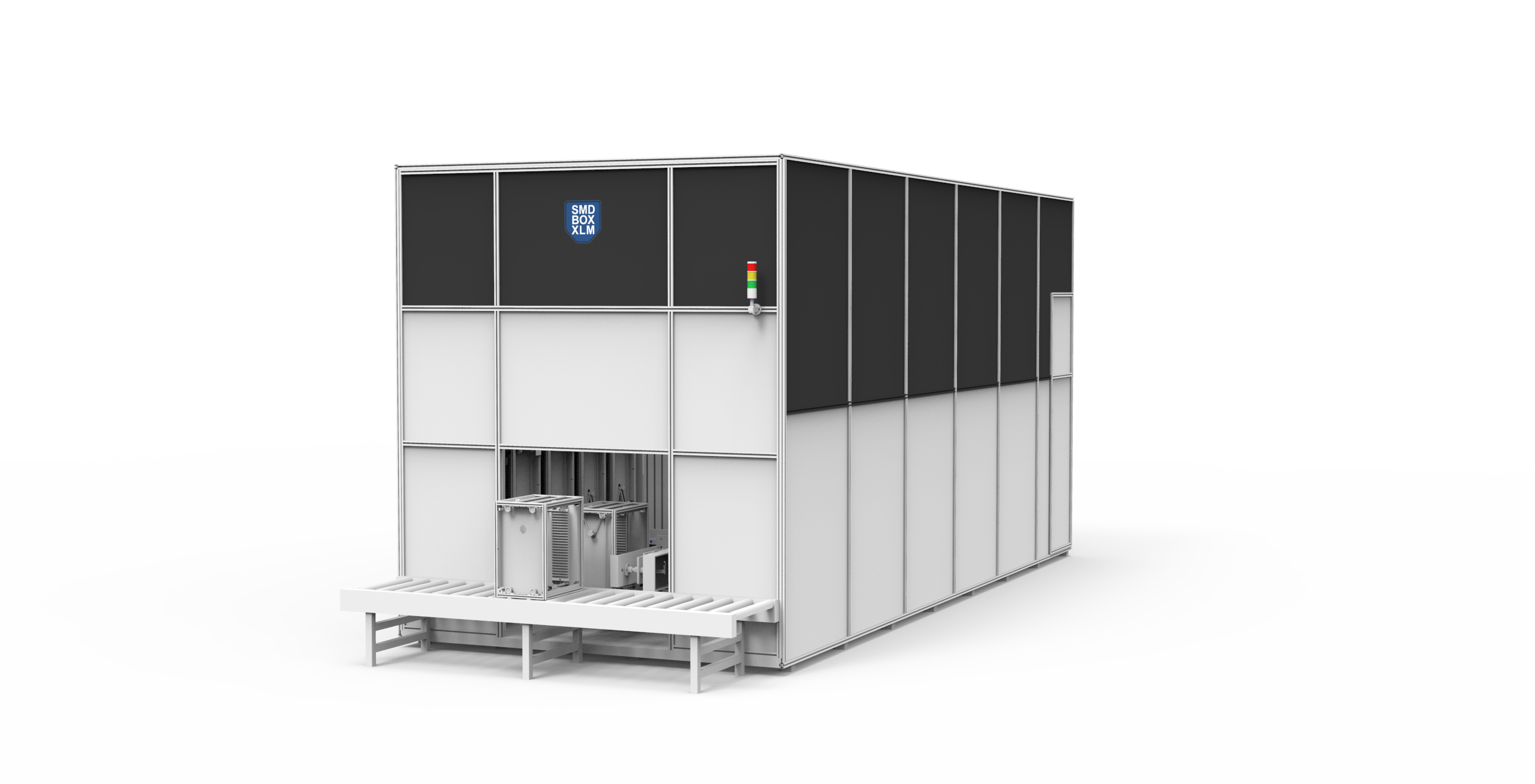
The fix mirrors what happened to reel storage: give magazines identity, location, and managed retrieval. An automated PCB magazine smart warehouse stores the same magazines you already own, tracks which boards are in which magazine, enforces FIFO, and dispatches by work order — turning floor-parked WIP into addressable inventory. For the full equipment landscape, see our loader, unloader, buffer and ASRS explainer.
A Practical PCB Handling Checklist
- Edge contact, gloves, and grounded workstations for every manual touch.
- Sealed or dry storage for anything moisture-sensitive that waits more than its floor life.
- SMEMA-compatible conveyors and correctly width-set magazines — mis-set rails are a classic edge-damage source.
- Every magazine identified (barcode or RFID) the moment boards enter it.
- FIFO enforced by system, not by memory, for any WIP that waits more than a shift.
Frequently Asked Questions
What is the standard for PCB handling and storage?
IPC-1601 covers printed board handling and storage — contamination, ESD, packaging, and humidity. IPC/JEDEC J-STD-033 governs moisture-sensitive floor life and dry storage. Together they define how boards are touched, packed, moved, and stored.
What equipment is used for PCB handling in SMT lines?
Conveyors, magazine loaders and unloaders, buffers, and flippers move boards through the line; ESD racks, PCB magazines, and automated magazine warehouses store them between processes.
How should populated PCBs be stored between processes?
In ESD-safe, identified magazines with humidity control where needed — and tracked in a system. The common failure is anonymity, not damage: WIP that exists physically but in no system. Automated magazine storage adds identity, location, and FIFO.